Image Map
Showing posts with label Classroom Management. Show all posts

Sunday, July 31, 2016

My 7 Must-Haves for a Smooth Back to School

Back to school season is officially here! A quick scroll through my Instagram feed is all I need for some cute classroom inspiration and motivation. I don't actually start school until the very end of August, but I have been going in to my room here and there since I'm already toting around a growing baby bump.

My little one on the way has also got me lesson planning for back to school and maternity leave. Since I am gearing up, I wanted to share the 7 products of mine that I created and still use every year to help get myself together and smoothly sail into the new year.


Data Notebooks are a must for back to school. I have worked in a Baldrige Schools (in which data notebooks are a requirement) since I began teaching and now I can't imagine not having one. We spend a lot of time the first week getting these notebooks set up, they make for perfect lessons to set expectations and build community. We start by creating and recording a mission and vision for our class, then we discuss and map out what quality students and quality teachers look like, and we have a section to set and check in on goals. We set up data graphs to track test scores, so throughout the year we are always revisiting to enter and reflect on progress,
My class rules posters are another piece that is essential for the first week. My class always has a big discussion about the rules we think we need in our classroom. I generally "guide" the discussion to the 3-5 rules that really sum up my expectations. While the students are discussing, I am jotting their ideas on the whiteboard, we are voting to see which rules are the most important, and we are revising to find ways to combine two or more similar rules. What's left when we're done is a messy board that reflects the input of every student. Sometime over the next couple days, I make the final rules fancy in my editable posters document and reintrouduce them to the class by having them turn and talk about why we decided each rule was important. It is a great refresher!


These schedule cards are something that I am just recently very excited about. Typically, I just print and post our typical daily schedule somewhere in the room and if things change then we just go with the flow. Towards the end of last year, during the crazy testing season when our schedule changed daily, I started writing the daily schedule on the board everyday with more detail. The students really loved it. They would pause to read it every day and then keep me on track with what was coming up. This year I decided to make event strips that I can laminate and just re-order in a pocket chart everyday to reflect our schedule.

This meet the teacher day kit has been a life-saver the past couple years. Our Open House day is always the last day of the work week, on a Friday, and then we come back Monday and start school. This is not ideal since the work week is full with meetings, not leaving me any time to set up. I a;so never had time after open house to organize the supplies the kids dropped off before school started on the following work day. This always created such a hectic, frantic time. Now, I can just update my about me/scavenger hunt booklet, print out the signs for supplies, and be ready to go!
For some reason, creating a sub binder was never something I thought was a big to-do at the beginning of the year. I would always drag my feet on putting one together because I knew I wasn't going to miss any crucial days at the start of the school year. Then, I had my daughter. I realized that your own children don't really care that it's the first month of school if they are sick themselves. That's when I started getting myself in gear and creating one right off the bat, just in case. The past school year, it really saved me a couple times when my daughter got sick over night and I could just tell my team to grab the sub binder with pre-made copies off my shelf vs. me having to drag myself into school at 7am to plan. (I also created a binder for maternity leave and blogged about it here.)


Every year I revamp my homework binder/folder a little bit, but the basics stay the same. I love being able to just make some edits vs. having to start from scratch. I also created some parent forms that are tailor-made to fit my classroom. It is so nice to have both in one place for when I am copying like a mad women during work week.

This last product is one that plays a big part in my lesson plans during the first week. One component of this pack is the data wall pieces. Posting and maintaining a data wall is a requirement for me, but I always try to make it as meaningful as possible for my students. I start with a blank wall and only add pieces after discussion or a lesson. The other piece in this pack is the essentials I need for my first week lesson plans, like get to know you writing prompts, behavior anchor charts, fake vs. real reading sort, how to treat a book lesson pieces, writing portfolio cover, etc.


There you have it! Those are all of the things I need to start my year off smoothly. It took me forever to find out what fits me best and crate these items, but now that I have them, it is easy breezy to do quick updates at the beginning of each year. All of these products are available in my TPT store and the majority of them are editable so that you can customize them to fit your classroom.

I bundled all 7 of these products together for the ultimate back to school package!

Please feel free to leave me comments with your ideas and must-haves for back to school.

Thursday, July 7, 2016

Morning Work: Reading, Writing, Centers, or Spiral?

One of the many things I didn't learn in college was the importance of morning work. Having a consistent, efficient morning routine can either set you up for an amazing morning of learning or have you worn out by 10, trying to get your class back on track.

Morning work is a HUGE part of how effective your morning routine is. I've tried a lot of different things for morning work over the years and I can attest to how it prepares everyone, even me, for the day. There is no one right way to do morning work, it really depends on your group of students and your schedule. Today, I want to talk through some of the different types of morning work I used in the past and what I got out of them.

Spiral review is typically the morning work I use for at least the first quarter of the school year because it builds consistency. I use Evan Moor's Daily Math Practice and Daily Language Review books, so the students have 5 math review and 5 reading/writing review questions every morning. I typically copy either one week or multiple weeks at a time and have them keep it in their morning work folders. Students know to come in, complete the questions, and then read. When I ring my bell, students put their books away and move down to the carpet with their morning work for review. The math review from this book is not super challenging, but I have to say that the one year I used this morning work ALL year, without switching it up, my students ended the year with phenomenal number sense.


Independent journal writing is another type of morning work I've tried briefly in the past. I would put up a PowerPoint slide with a new writing prompt every morning and students would either write about that prompt, choose a topic from the monthly calendar glued into their notebooks, or select their own topic. This definitely helped students grow as writers as far as written expression and composition. It is not a replacement for formal writing instruction because usage, mechanics, and format still needed a lot of work. One of the rules my students needed was no drawing until at least 5 sentences had been written. I also had a "must-start" time. Usually right after announcements, I would ring my bell to signify students that their prompt selection time was up. If students had not yet chosen a topic and started writing, they had to use the prompt of the day on the board,

Reading as morning work was by far my favorite morning work ever! It is outweighed only by the fact that my students had such amazing number sense from the year I did spiral math every morning.

I am definitely not a morning person. Sustained silent reading as morning work was my favorite because I didn't have to prep anything for it, it started the students off quiet/calm, and it gave me ample time to get in attendance and lunch count. This year, SSR will be school wide morning work, for the first 30 minutes of the day. As the departmentalized reading teacher, I love this! In my state, third graders have language arts for 90 minutes a day. When you have to squeeze SSR into that time (along with guided reading groups, whole group reading instruction, and writing instruction), the block becomes very tight. Having 30 minutes of reading first thing doesn't technically take time from my reading block, so I get a full 90 minutes with both of my reading classes!

Centers as morning work is something I've only experimented with briefly during my career. Students absolutely love it, but it starts the day with a lot of energy, so it can be difficult to get them refocused for a mini-lesson once all the morning tasks are done. I've found that it is definitely something that takes a lot of teaching, both with explicit behavior expectations and with how to complete specific centers correctly. Procedures can take a while to learn because students are excited to see their friends first thing in the morning and want to talk about everything. We had to have several class meetings on what "math talk" sounds like at centers to help them stay focused in the morning.

I would love to hear from you guys, I always get such amazing ideas from feedback.
What do you use as morning work?
Does your entire team do the same thing?
Is morning work at all mandated by your building principal?

Leave me your thoughts!

Saturday, July 2, 2016

Oh, Baby! Preparing Students for Maternity Leave


If you read my "Five for Friday" yesterday, then you know I am expecting. I am filled with both joy and anxiety. My due date is September 30th, so IF I make it to that date, I only have 4 weeks to prepare my classroom and students for my six week departure. Like the Type-A, OCD teacher I am, I have already started doing many things to prepare.

I've noticed from scrolls through my Instagram feed, that many of the fabulous teachers I follow are also expecting and due around my timeline. My hope is that this post will help any teacher prepare for maternity leave, especially those who have to step away at the beginning of the year. Or, help any teacher who has to prepare for another extended leave due to health or family leave.

When I had my first daughter, it was at the beginning of April, so my experience was a little different. I did learn that there are two crucial things that need to happen before you leave:
1. Prepare Your Students
2. Establish Routines

Talk About It: Begin the conversation about your upcoming absence. Don't let it be a surprise or something you mention for the first time a week before you're due. Even though your students can see that you are pregnant, younger ones won't actually realize that you will have to leave for a while when the baby is born.

Meet & Greet: If possible, have your sub come in for a day to meet your students. If you have an amazing principal, they might pay the sub for a day (or a half day) to shadow you and see how things work in your room. Take full advantage of having the sub and begin establishing relationships and helping them understand the consistency of your routines.

Get Them Excited: Plan a mini-baby shower for your class. Bring in cupcakes, play shower games, and even have them vote on names for your little one. Anything that gets them involved and excited will help them understand why you will be gone for so long.
The last week of school my sweet class threw me a surprise birthday party/baby shower. 
They decorated the classroom, brought in cupcakes/chips/juice/my favorite soda, and even gifts! 
I will definitely miss this bunch! It was such a great time!

Explain Everything: Well, not everything... Just be very clear about the importance of certain routines and the responsibility the students will have to follow them while you are gone. Don't just explain the math workshop routine, have a conversation about how it is important for them to follow the rules and learn how to do it right, so they can continue to enjoy workshop while you are gone.

Think About the Little Things: Make sure your classroom can run without you. Do students know what to do if they need a tissue, have to use the bathroom, loose supplies, have a question, need help, lose an assignment, etc. Think of all the little things students run to you for at random times throughout the day and make sure they know what to do. This would be a great anchor chart to create and hang in your room.
This amazing anchor chart is from Haley at My Silly Firsties.

Class Meetings: Have daily, bi-weekly, or weekly class meetings leading up to your leave. This will help build culture and it will give more time for conversation about what they should expect while you are gone. One great thing to do would be to role-play scenarios of every day things that might happen, and how the kids should handle it.


(...like, for real)

Step Your Game Up: In the weeks leading up to your leave, there is no room to play the nicey-nice teacher who lets students skate by with not meeting expectations. You don't have to be mean to be firm. Students should know that you expect them to meet whatever expectation is set, consistently. This might mean being the obnoxious teacher in the hallway, being a hardcore bathroom monitor, or shooting that death glare if someone calls out without raising a hand. It can be exhausting, but if you are consistent, then it won't last long and your sub will thank you.

Record Your Routines: Whether or not your sub can shadow you for a day, you need to have all of your routines written up somewhere for them to refer to. You should also include notes on rewards or consequences that are attached to following the procedures/routines.

Create Visual References: Don't just rely on your student's memory to follow all the routines exactly while you are gone. Create anchor charts with your students before you leave. Have them just used to knowing where the charts are and following them. For my last leave, I had a routine PowerPoint with slides for am routine, pm routine, entering/exiting class, lining up, bathroom, recess, hallway, cleaning up, getting out supplies, independent reading, math centers, fire drills, etc.. The sub would pull up the PPT every morning and display the slides as needed. The kids were used to it, because I used the same thing before I left.


---Organizing Your Room for a Sub
---Creating a Maternity Leave Binder


Saturday, September 26, 2015

Fall in Love with Teaching Blog Hop

I am so excited to be participating in the "Fall in Love With Teaching" blog hop. Today, I want to share my ideas for avoiding the paper trap. (Keep reading...there may or may not be a giveaway at the end of this post.)


Here's how I control the choas in my classroom:

1. Top-Cubby Turn In
Every student in my room has a cubby for their bookbag. The bottom part of their cubby is for snack, lunchboxes, and clipboards. The top part of their cubby is for turning in work. I typically just have a "Reading", "Math", and "SS/Science" turn in bin that my students put their papers in as they finish an assignment. However... I can be super lazy and let the papers pile up and then it's frustrating to try to match up all the different assignments from that subject and put them in number order for entering grades.

Now, as soon as my students finish an activity they put it in their "top cubby". Later, when most are turned in, I walk around and collect them. Since my cubbies are numbered, the papers are already in ABC order and it is really easy for me to see who hasn't turned it in.

2. The Grading Crate
Instead of having student mailboxes that I sort graded papers into, I have a grading crate. I throw all of my graded assignments in the crate and when I have time (assemblies, indoor recess, etc.) I sort the papers into the hanging file folders which are in order by student number. By this point in the year, I have my student numbers memorized so it usually doesn't take me that long to sort. I love this because it can just go in the corner when I don't need it and if I need to take it home to catch up, it is easy to do.

3. Unfinished/Absent Work Bins
In my classroom, I have these amazing shelves that hold paper bins. Every student has one to house their textbooks (on bottom) and their unfinished word (on top). I have noticed that unfinished work has a greater chance of actually getting done if their desk can't eat it.  When a student is absent, I just pull out their bin, set it on their desk, and assign a desk-mate the job of making sure all of the missing student's papers gets their name on it and into the bin.


There you have it! 3 simple ways that I have found to make my classroom-life easier.


a Rafflecopter giveaway

...Keep reading for yet another giveaway...

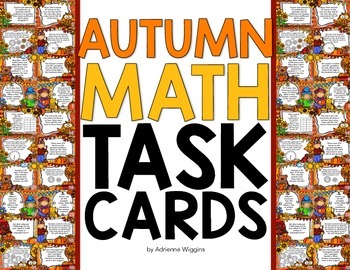
Looking for some Autumn infusion for your classroom? Check out my Autumn Themed Math & Grammar Task Cards, Hot off the Press! They can be downloaded together or individually.


a Rafflecopter giveaway
Don't stop now! Keep on hoppin' with Edventures4Kids!
Image Map

Tuesday, July 29, 2014

Quick Tips: Managing Student Interruptions

I'm back with another super quick tip from my classroom to yours. Today's focus is finding a way to manage student interruptions during a lesson. Have you ever been really into a lesson? Everything's going your way, then you ask a phenomenal question and hands shoot up. You see a student raising their hand that doesn't usually participate and you think "Man, I am on FIRE! All my students are engaged!" ...and then you call on the kid and they ask to go to the bathroom, or for a drink of water, or how much longer until lunch. Bummer. I have been there and it is not my favorite. It is usually met with my no-nonsense glare that implies, "This is NOT the right time for you to be asking me that!"


Here is a tip I recently learned in an inservice:
Teach students the difference between a public and private question.

Public questions have are about the lesson or assignment and have answers that will benefit the entire class. Students can go ahead and raise their hand for these. Public questions let the teacher know the student is listening and cares about their learning.

Private questions are not about the lesson, or an assignment, or anything that is currently happening. If a student needs to ask this question in the middle of a lesson, they put their hand over their heart and the teacher will get to them when momentum allows.

So there you have it.

Public Questions: Hand in the air
Private Questions: Hand on chest


I will definitely be taking time at the beginning of the year to discuss, model, role play, sort, and correct.

I would love to hear what you use in your classroom. Comment below and let me know!

Monday, July 21, 2014

Sticks & Stickers: Behavior Management

I am so excited to be linking up with my post about behavior management. As teachers, we know this is a crucial part of any successful classroom. It is also one of my favorite topics to read about  on blogs and browse on Pinterest.

Every year my system changes based on what I learned the following year and my new group of kiddos. This past year, my management plan was based on sticks and stickers.


Here's how it worked

Sticks

Each student had a numbered Popsicle stick in a bucket near my desk (I used the metal pails that are always in the dollar spot at Target). If a student made a poor choice after an individual or class warning, they were asked to move their stick into the bucket marked 1. The next time, they had to move it to bin 2, then 3. When they were not able to move their stick anymore they had to sign the red discipline binder. The binder is a school wide way to document student behavior. At the end of each quarter, the principals have some sort of fun activity for the kids who haven't signed it. 

What I love about sticks is:

1. It's Easy: Popsicle sticks are cheap and it didn't require me to make anything.


2. It's Private: the bins are located by my desk so other students can't see where their friends are. We are not allowed to do the green, yellow, red cards at our school because our administration feels it can humiliate a student and people/other adults coming in the room know information about that child. 


3. THEY CAN EARN STICKS BACK!: I know it seems like I give them a lot of chances, it is 4 total (warning, bin 1, bin 2, bin 3, THEN discipline binder). I take sticks quickly and immediately after a warning; they don't get a sassy look or a "I'll just wait" pause. I have found that losing a stick motivates them to work harder. Students were always coming to me to say, "I'm going to earn it back. I know i can!" Most of the time students earned their stick back by the end of the day.


Stickers

In my classroom, stickers were the reward for not losing your stick or for earning it back by the end of the day. Each of my students had a behavior calendar (It was just a monthly calendar that went home every night). If students earned their sticker, it went on that day on the calendar. If students didn't earn their sticker, I put a slash on the day and jotted a quick note on the back (I found that I had to put a slash or crafty students would just find their own sticker to put there). Parents sign these every night so it really helped with communication. There was almost no "I didn't know Johnny was having trouble" at report card time.

What do the stickers mean? REWARDS! I had a list of non edible rewards that the students LOVED. At the end of each month I would collect their calendars, count their stickers, and offer them a choice of rewards based on their total.


What I love about stickers is:


1. It helped students with organization: They got one calendar a month, that's it. If they lost it they couldn't earn stickers or get monthly reward (I would just email if they lost their sticker for the day or a note home separately). If they forgot their calendar at home, no sticker. I can count on one hand the amount of times a student lost their calendar or left it at home, and it was always the same students.


2. Documentation: If an issue arose with a certain student, I could whip out their behavior calendars from every month and see how many times they lost a sticker and what for. I've taken them to IEP and FBA meetings. I've had parents ask for copies to take to the doctor and discuss if new medication was working. I've even had some parents go to my principal to complain about a punishment that they thought was unfair since they didn't know about the behavior. I was able to whip out the calendar and show their signature next to each lost sticker. It was wonderful. This system had actually saved me a couple times.


I realize that this system isn't for everyone. I've had colleagues say that it is too time consuming because they don't want to have to check in with every student, every afternoon. 


Here are some ways I found to better manage my time:

1. Students take it out of their folder and turn it in as they unpack in the morning. This way I don't have to flip through folders, they're all in one pile.


2. Pre-sticker: I pre-sticker as many calendars as I can while the kids are doing morning work. There were about 20 of my 26 who rarely or never lost a stick. This helped tremendously because in the afternoon chaos I only had to worry about 6 calendars and they were all right on top.


3. Make it Routine: The passing back of calendars was part of our dismissal routine. I would call students one at a time while they were reading quietly to come to my desk and get their calendar. Then they were free to pack up, stack chairs, and start their afternoon job. This allowed me time for the best behavior manager of all;  feedback and relationship. I used this couple of seconds to encourage/congratulate sticker students and conference with no sticker students. A lot of the time I would pretend I forgot why a student lost their stick and have them tell me. This helped them take ownership by stating "I..." Other times I would have them tell me what to jot down as a reason for their parent or have them read the note I already wrote aloud. This was always a really calm, encouraging conversation and not accusatory. My goal was to leave the children happy and empowered to make better decisions.

Well, there you have it. This system works great for me and I love it. I plan on tweaking it a little this year. I am planning on a follow-up post once school gets started and we can live it for a while. Thanks for stopping by! 


Swing by Mrs. V's Busy Bees for other awesome behavior management ideas.


Tuesday, July 9, 2013

Classroom Management Party!

 
Today I am linking up with Mel D. at Seusstastic Classroom Inspirations. I really like reading about other teacher's classroom management strategies because I am constantly on the hunt for ways to improve my classroom. I have already been at work on my brand new management strategy for next year. This will be my third year teaching and I have had a different behavior system every year. I learn so much every year that I feel the need to tweak the system to better fit my classrooms needs. Here's what I've learned over the years:

My First Year: I had a lot of parents who were "surprised" by their child's misbehavior and just couldn't believe when they got a referral because their child was so well behaved at home and they didn't know their kid was having trouble in school and blah, blah, blah... I don't mean to be rude, but honestly their child is most likely the same at home and they are just trying to get them out of trouble. Not that I can blame them, I'm sure I wouldn't want my kid to get a referral either. Long story short, the lesson I learned was SEND HOME DOCUMENTATION OF BEHAVIOR EVERYDAY! Even on days when students were well behaved because parents need to be in the habit of looking for it and they can't say they were unaware of their child's behavior.

My Second Year: I decided to have a monthly communication card that went home every night. Students started off the day with 5 points and could lose point during the day for poor behavior. At the end of each day I marked their behavior, checked that their parent signed the day before, and wrote a quick note on the back if they lost a point. Now, let me tell you, this took about 15 seconds for each child at the end of the day and that is FOREVER when you are trying to pack up/clean up and your last lesson ran long. The long story short here is that I can be lazy and the lesson I learned was to PICK SOMETHING THAT IS NOT TIME CONSUMING FOR YOU! Don't get me wrong, there were many benefits to this system. I loved that the parents saw the behavior every night and I had no issues this year with parents being "shocked" due to behavior. Also, I keep each month's record, so I had great data of each student's behavior record. This really came in handy when one parent needed a copy of all the past month's records for their kid's psychologist and the principal needed a set for another student when another issue arose. Having these daily forms with notes as to why students lost points really covered me.

So basically what I have learned is:
  • send documentations home everyday
  • pick something that isn't time consuming
  • reward the well-behaved students
  • use something tangible that will redirect students
  • lay out the specifics from day one
So this year I will be using a new strategy that involves Popsicle sticks. Here it goes:

•Students begin each day with 3 sticks

•If a student’s behavior is not meeting expectations, they will receive one warning before they begin losing sticks

•Student can earn back sticks throughout the day for positive behavior choices

•If students have all 3 of their sticks at the end of the day, they earn a sticker on their behavior calendar. If not, the improvement sheet on the back of the calendar will be filled in and will need parent initials. (I made a grid that has several common misbehaviors and I just write the date and check off what behavior caused their child to lose a point, easy peasy! There is also room for both me and the parent to write notes or comments.)

•At the end of the month, students receive a reward based on the number of stickers they earned that month.
-Students can also earn extra stickers for being the mystery walker, having a clean desk for surprise desk checks, or exhibiting outstanding behavior.

  • Positive Consequences  (So basically, if a student earned 15 stickers in a month, their reward can be #15 or anything below it.)
23+: Eat lunch with another 3rd grade class
22. Play a Promethean game with a friend
21. Trade seats with a friend for the day
20. Use the swivel chair for the day
19. 10 minutes of free time on the computer

18. Show & Tell

17. Use the bean bag for the day
16. Teacher cleans & organizes your desk
15. Morning work pass
14. Pick one math workshop or Daily Five center
13. Join another days group
12. Read a writing or book to the class

11. Bring a stuffed animal for the day
10. Homework pass

9. 5 minutes of free time on the computer
8. Line Leader for the Day
7. Switch out books in book bin
Negative Consequences

•Warning: no consequence

•Lose 1 stick: no sticker on behavior calendar (A line is drawn through the box so sneaky students can't go back an add a sticker later, it is amazing how creative students can be when it comes to rewards.)

•Lose 2 sticks: 3 minutes of recess, no sticker

•Lose 3 sticks: fill out think sheet, 3 minutes of recess, no sticker

•No more sticks to give: sign the Red Discipline Binder, fill out think sheet, 3 minutes of recess, no sticker


Students can lose points for difficulty with the following expectations:
-Working in a group
-Using materials responsibly
-Exhibiting organizational skills
-Following directions
-Returning materials to school
-Completing homework
-Practicing self-discipline
-Respecting authority
-Respecting the rights, opinion, and property of others
-Following school and classroom rules 

****All of this information is going home to parents as part of my classroom procedures at the beginning of the year and they will have to sign and return a form saying they read it. I think I have everything covered here. There is a clear outline for what causes students to lose points so it will be less subjective for me. Students can earn stickers in many ways, so they won't get discouraged and stop trying at the end of the month if their count is too low to win something. Rewards start at only 7 stickers so even students with behavior trouble can experience a prize and be motivated to earn more next month. The rewards are only monthly, so I'm not driving myself crazy trying to keep up with it. Students will have to physically put a stick on my desk so the movement will redirect their behavior. Students can earn sticks back for better behavior choices so they always feel as though they can "win" at the end of the day. I also plan on having students leave their calendars on top of their desk during Daily 5 (we have this at the very end of the day) so I can easily walk around during each rotation and sticker a couple calendars at a time. This way I won't have a mad rush at the end of the day. 


Whew! I think I have everything covered. Let me know what you think or if you've tried something similar. I can't wait to keep reading how everyone else manages their room!


~Adrienne


Image Map