Image Map
Showing posts with label Read Aloud. Show all posts

Tuesday, July 5, 2016

Engaging Read-Alouds with Accountability

Read alouds are one of my favorite parts of teaching! Unfortunately, in this test driven system, 3rd graders are expected more and more to be doing passages instead of listening to read alouds; especially as testing season nears at the end of the year. Obviously, any teacher with a degree in their field took some class somewhere on reading and knows that read alouds are extremely beneficial for students not only learning to read, but "reading to learn".


As my team knows, I can be very stubborn when I feel like I am championing a cause. Typically, my cause is fighting against teaching to the test. This year, I continued my read alouds multiple times a week right through testing season to the end of the year. I refused to switch to only passages during testing season, even though that was the push. If I went more than 2-3 days without a read aloud, my kids would get super dramatic and say, "Can we please read something....you haven't read to us in forever!" I know my students appreciated not being rundown with test prep and this actually ended up being the highest scoring year I've ever had for state tests. They rocked it!

Sometimes, my read aloud are just read alouds.
We enjoy a good book, I model fluency, we turn and talk, and we enjoy sharing our thoughts and predictions.

However, this year I decided to step my read alouds up a notch by having the students bring their white boards to the carpet as an added piece of accountability. Using my document camera to project the book on my SmartBoard, I would stop throughout and ask them to use the text and record the answers to skill/strategy questions I asked on their board. The added step of independently recording their thoughts/answers on their white boards before turning, talking, and sharing, really boosted engagement. Not only could I monitor which kids weren't getting the "big ideas", but I noticed that the turn and talk times were more balanced because both students had extra time to think about their opinions before sharing.

Here are the basics of how I run white board read alouds in my classroom:

Pros
-The students get the benefit of a read aloud PLUS skill/strategy
-Students are practicing skills in context (which I noticed actually boosted their results on reading passages)
-Total Engagement: Everyone is participating because everyone is writing a response on their whiteboard.
-This is an amazing way to informally assess your students.
-I have done this with a picture book and a chapter book, it works both ways!
-The students love it! They feel more involved in the read aloud process, even if they aren't called on to share.

How
First, select a skill to focus on and a book that can provide practice with that -or- select a book to read and flag the multiple different skills you can use the book with.
Then:
1. Read the book
2. Find a good place in the story to stop
3. Ask a question about the text
4. Give the students time to jot their thoughts/answers independently
5. Give the students time to turn and talk with one buddy
6. Call on a couple students to share out
7. Continue Reading

Tips
-Don't stop at every page, read enough at one time so that students can get into the story.
-Have rules for the white boards so they don't become a distraction. My rule is that there is no drawing, doodling, or erasing while I'm reading. I remind them to uncap their markers when I ask a question and to cap their markers before I start reading again. They actually get really good at this and will remind a neighbor if they are off-task.
-Give them time to write independently before sharing, this is their extended think time. You will definitely get better results from the process.
-Pair up students for turn and talk before starting, this will make the process go a lot smoother.
-Pre-select the book to fit the specific skill you are covering. For example, when we were working on homophones, I looked for a book that had a couple pages with more than one homophone.
-Use a document camera so students can see the text.
*Tip* Give students a sentence frame that they must use in their response.
This will help them practice sentence formation and it will boost
academic language use for your ESOL students!

Examples of Questions You Could Ask:
-Write down all the compound words you see on the page.
-Find a four-syllable word on the page, write it on your board, and divide it into syllables.
-Put all the names on this page in ABC order.
-Which two words on this page are homophones?
-The author said the character is clever, write a synonym for the word clever.
-What is the setting for this page?
-What is the problem that --- has on this page? How do you predict the problem will be solved?
-Write two character traits that describe ---.
-What caused --- to happen? What was the effect of ---?
-The text says the character walked very slowly and the picture shows that he looks concerned. What can you infer about where he is headed?
-What would be a good title for this chapter (or heading for this section)?

Hopefully, at least one teacher reading this will give it a try in the fall. Let me know what you think or if you already do something similar in your classroom.


Sunday, December 21, 2014

Synthesis Interactive Notebook

I have been using interactive notebooks for everything these days and the kids and I are loving it! The new buzz word in my classroom is "pizazz"! One day, a student said that I always add pizazz to my notebook pages by coloring and writing neatly and now they have pizazz contests every time we work in our notebook. I don't think I've ever had a class that loves notebooking more than me, I have been on cloud nine!

I started the lesson by asking my third graders what they knew about synthesis. Some students had good guesses relating to photosynthesis, but no one knew what I was getting at. We have been talking a lot lately about “thinking about our thinking” and I told them synthesis was one way to do that. I brought in Russian nesting dolls and held the stacked dolls up. I asked if any students had ever seen them before and only a couple had. I told the students that the doll represented their thinking after they were done reading. Then, I opened up the doll and started unstacking the smaller dolls. The kids got SO excited, by the time I looked back up, they had all inched at least 2 feet closer! I held up the smallest doll and told the students that it represented their thinking at the beginning of reading a book, small. They don’t know much about the book yet and they can only connect to that little bit they know. Then I held up each doll as explained that as they read, they learn more, they can connect to more, their thinking gets bigger, and their ideas grow. They totally got this! I had them glue a title notes strip to a blank page in their reading notebook and we highlighted key words (this can be found here, if your are interested).


Next, I told the kiddos that we were going to practice synthesis together and I pulled out The Littlest Matryoshka by Corinne Demas Bliss. The students really enjoyed this book. I created paper stacking dolls for students to glue into their notebook as a flipbook. We stopped after the first page, dicussed/filled out the smallest doll, and glued it in the middle of the notebook page.Throughout the book, we stopped, discussed, and added pages to our doll flipbook. Each time, I reminded the students that their thinking was getting bigger, so the doll was getting bigger. 


After the book, when our flipbook was completely assembled, we wrote on the first page underneath the title strip. I had my students start their paragraph by telling me what synthesis was and then add their sentences from the dolls as their detail sentences. They were asked to make their closing sentence a feeling, thought, or opinion of the book. This lesson took 3 days to complete, but the students were engaged every day. After the first day, I had a group of pulled students re-enter the room and the rest of the kids immediately started telling them what synthesis was, what the dolls looked like, and how the two fit together. It was awesome!

Below are some pictures of our learning:


(The anchor below we used with the book Emma Kate by Patricia Polacco.)


I still have a week or more of teaching synthesis after we return from winter break and I would love any ideas you have! Thanks for stopping by!

Thursday, December 4, 2014

Historical Fiction

I have been teaching third for four years (five if you count my graduate internship) and I have never explicitly taught historical fiction. Sure, I covered it as a part of genre, but that was it. Our county recently adopted a new program, Benchmark Literacy, which definitely has it's ups and downs. The program has us spending 2 weeks on historical fiction, and I have to say that I have loved it. Here's what we've been up to:

First I introduced historical fiction with the definition on my anchor. Since I like "well-put-together-looking" anchor charts, but don't have tons of time in my classroom before or after school to create them, I typed up the headers I wanted for my chart and just glued them on. If you're interested, you can find them here.
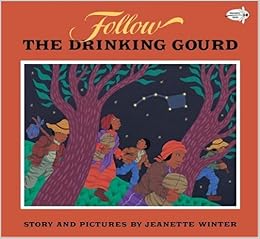
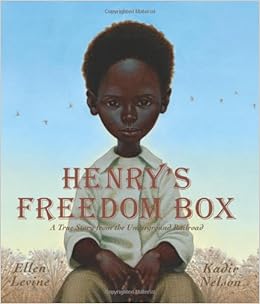
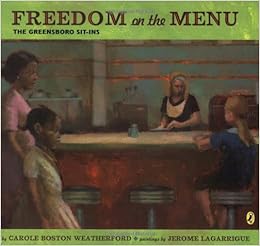
Next, we made connections by finding historical fiction picture books in my classroom library and discussing ones that they have already read. We found:


Then, we read one of my favorite historical fiction books, The President and Mom's Apple Pie by Michael Garland. It is about President Taft visiting a town for a flag pole ceremony and going on a hunt for the scrumptious food he smells. There is even a paragraph inside the front cover that tells about President Taft, which was helpful when we were separated fact from fiction.

We added to our anchor chart as we read.


Then, the students glued a historical fiction foldable into their reading notebook (you can also find that here) and copied from our anchor chart. We put nonfiction elements behind the flap and fiction on the notebook paper. When they were done, they had to add at least one fact to each category on their own and respond to the prompt strip glued into their notebook.


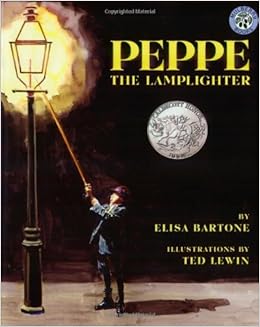
Peppe the Lamplighter by Elisa Bartone is a historical fiction book I just found. I plan on reading it to my students next week. It is a great story with amazing paintings/illustrations, but will take some discussion beforehand. I'm thinking I will have to discuss the concept of "Little Italy",  mention that some religions light candles for prayers, and briefly describe the flow of immigrants in 20th century New York.

I also have the historical fiction poster from my free genre poster pack on display!


Please let me know what books or activities you do while teaching historical fiction. Don't forget to swing by for my 1,000 follower freebie! See you soon!

Friday, February 21, 2014

Must-Read Monday Linky: The Stranger

I'm all about a good read aloud. I'll admit that I don't get to read aloud to my third graders as much as I'd like to. However, when I get the time, nothing beats all my students being invested and engaged in the same book at the same time. Sometimes I will choose a read aloud book that I think is great and it will fall flat, or only some students will find it interesting. But sometimes, I'll come across a gem, a book that my entire class LOVES.

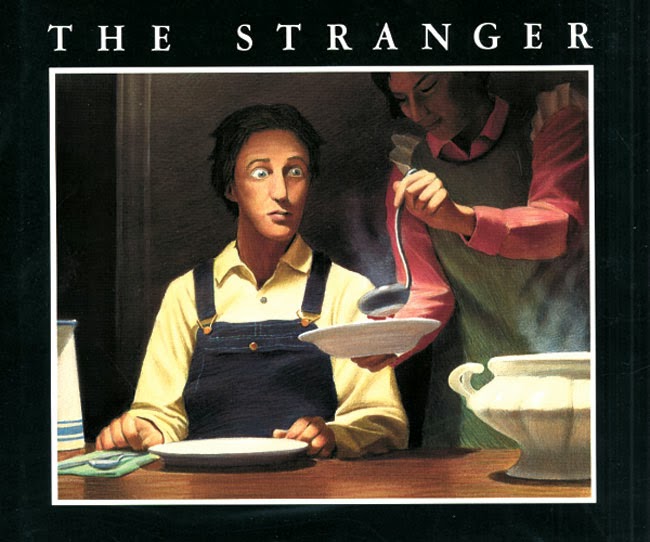
The Stranger by Chris Van Allsburg was this book for us recently. I used this book to help teach questioning. As a class we brainstormed questions before, during, and after reading. We also stopped throughout the book to answer the questions that the students created. They were really into listening to find the answers to the questions they created. They also liked the mystery in the book. Who was this stranger? Where did he come from? I had to explain the ending to most of them, about how the stranger was a Jack Frost/Father Nature type character. Once they figured this out, they loved the book even more. All I heard was "Oooohhhh, that's why....". You can't beat a book that students are still talking about at the end of the day and asking to reread weeks later.


.

Hop on over to Teaching Maddeness to read about more great books or link up with your own.

Must-Read Monday Linky